
HVAC Repair and Replacement Guide
Regular HVAC maintenance extends system life and cuts energy costs. Monthly filter changes and annual professional tune-ups prevent expensive emergency repairs and keep your system running efficiently.

By: Kevin Anderson
 4 Minute read
Regular HVAC maintenance extends system life and cuts energy costs. Monthly filter changes and annual professional tune-ups prevent expensive emergency repairs and keep your system running efficiently.
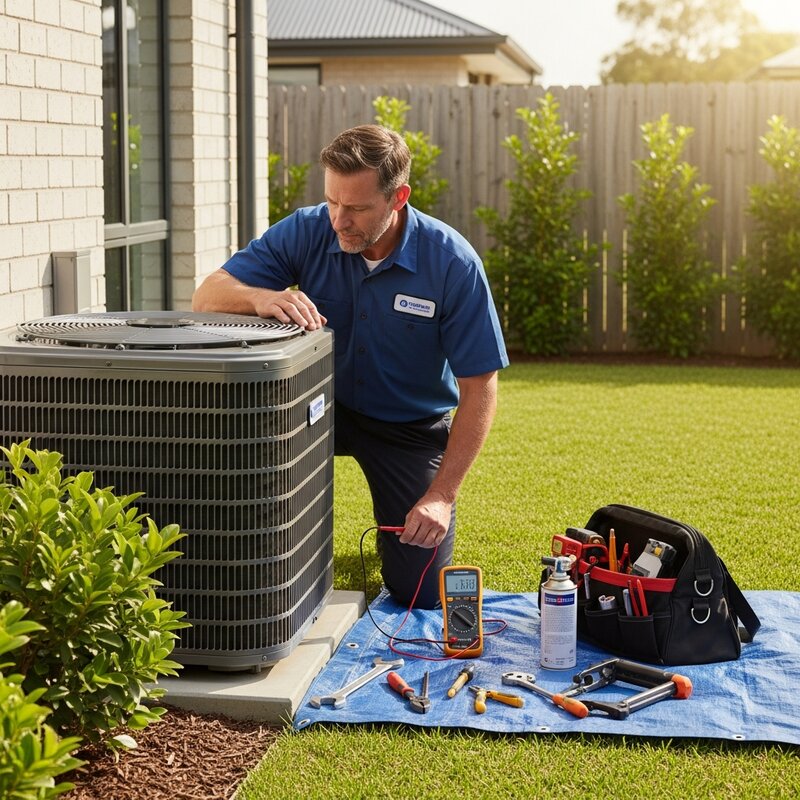
Common repair issues vary in complexity and cost. Thermostat problems are simplest and cheapest to fix, often costing $100 to $300 for replacement. Capacitor failures preventing compressors or fans from starting cost $150 to $400 to repair. Refrigerant leaks require locating the leak, repairing it, and recharging the system, typically costing $200 to $1,500 depending on leak location and refrigerant type.
Compressor failures represent the most expensive single-component repair, costing $1,200 to $2,500 for replacement. At this price point, system age becomes critical—replacing a compressor in a 12-year-old system may not make financial sense compared to full system replacement. Blower motor replacements cost $400 to $600, while evaporator coil replacements run $600 to $2,000.
Common repairs and typical costs:
Consider system age, repair frequency, and total repair costs when deciding whether repair or replacement makes better financial sense for your situation.
Several factors indicate replacement makes more sense than continued repairs. Age is primary—systems over 15 years old approaching the end of typical lifespans should be replaced rather than investing in expensive repairs. If repair costs exceed 50% of replacement costs, replacement usually provides better value, especially for older systems likely requiring additional repairs soon.
Frequent repairs, even minor ones, signal declining reliability. If you've called for service multiple times in recent years, replacement prevents ongoing service call expenses and eliminates uncertainty about when the next breakdown will occur. Rising energy bills despite consistent usage patterns indicate declining efficiency, with replacement systems offering 20-40% energy savings through modern technology.
Repair versus replacement considerations:
New systems qualify for rebates and tax credits potentially offsetting 10-30% of costs, making replacement more affordable while providing warranties covering repairs for 5-10 years, eliminating near-term repair costs.
SEER ratings measure air conditioner efficiency, with higher numbers indicating greater efficiency and lower operating costs. Minimum legal standards require 14 SEER for new systems in northern states and 15 SEER in southern states. High-efficiency systems rated 18-25 SEER cost more upfront but save significantly on monthly energy bills, particularly in climates with long cooling seasons.
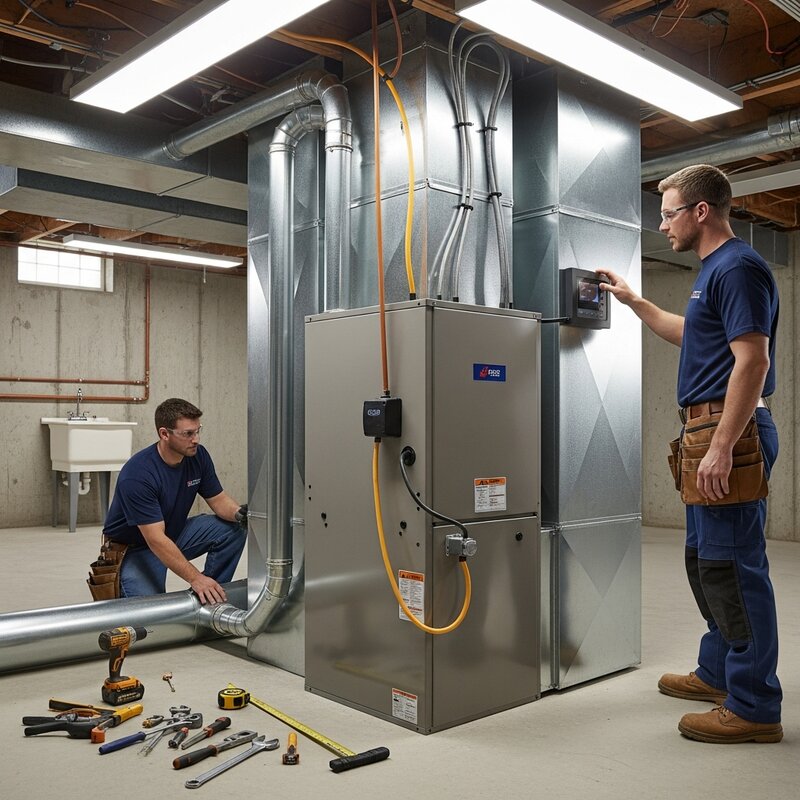
Proper system sizing critically affects performance and efficiency. Oversized systems cycle on and off frequently, failing to adequately dehumidify and wearing out components faster. Undersized systems run constantly without achieving desired temperatures, consuming excessive energy while providing poor comfort. Professional load calculations considering home size, insulation, windows, and climate determine appropriate capacity measured in tons or BTUs.
New system evaluation factors:
Seasonal preparation optimizes performance and prevents issues. Before summer, clean outdoor coils, verify refrigerant charge, and test cooling performance. Before winter, inspect and clean burners, test ignition systems, check carbon monoxide detectors, and verify proper airflow. These proactive steps prevent breakdowns during peak demand when service calls are most expensive and wait times longest.