
Roof Replacement Guide
Knowing when your roof needs repair versus full replacement prevents interior damage and saves money. Age is the primary factor — most asphalt shingle roofs last 20-30 years before replacement becomes necessary.

By: Kevin Anderson
 4 Minute read
Knowing when your roof needs repair versus full replacement prevents interior damage and saves money. Age is the primary factor — most asphalt shingle roofs last 20-30 years before replacement becomes necessary.
Asphalt shingles remain the most popular choice, costing $3.50 to $5.50 per square foot installed and lasting 20 to 30 years. Three-tab shingles offer basic protection at lower costs, while architectural shingles provide enhanced aesthetics and slightly longer lifespans. They work well in most climates and come in numerous colors matching any home style.
Metal roofing costs $7 to $14 per square foot but lasts 40 to 70 years with minimal maintenance. Metal reflects heat, reducing cooling costs in warm climates, and handles snow and ice better than shingles. Tile roofing, whether clay or concrete, costs $10 to $18 per square foot and lasts 50 years or more. Tile provides excellent fire resistance and works beautifully in Mediterranean or Spanish-style architecture.
Material comparison factors:
Consider your budget, home style, climate, and how long you plan to own the home when selecting materials balancing initial costs against long-term value.
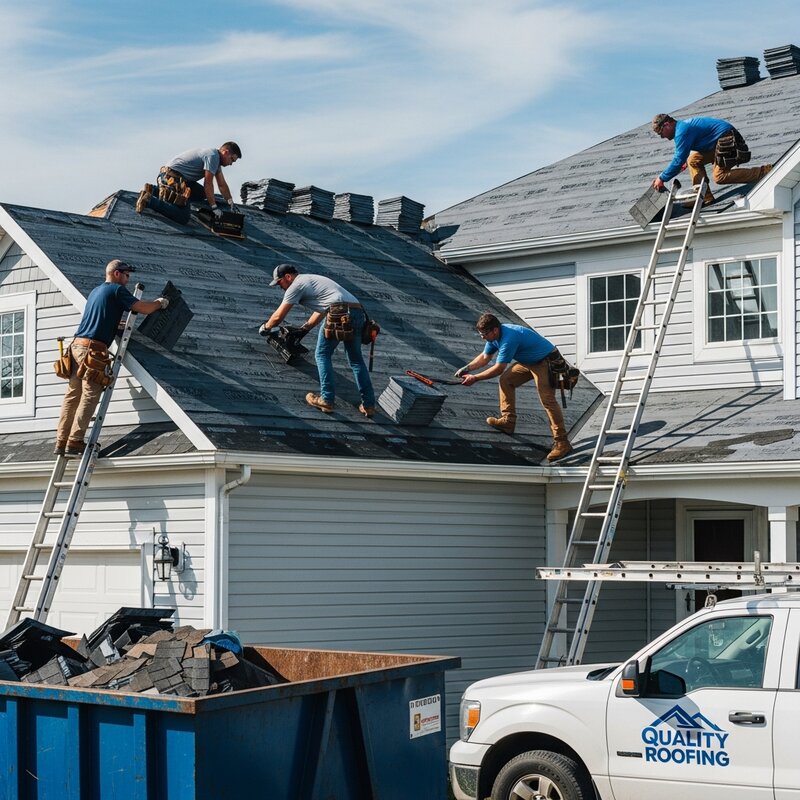
Comprehensive estimates should detail materials, labor, tear-off and disposal, permits, and timeline expectations. Materials costs include shingles or other roofing material, underlayment, flashing, ventilation components, and fasteners. Labor typically represents 40-50% of total costs and varies by region, roof complexity, and contractor experience.
Tear-off and disposal of old roofing materials add $1 to $2 per square foot depending on layers requiring removal and local disposal fees. Some contractors offer overlay options installing new shingles over existing ones, reducing costs but potentially shortening the new roof's lifespan and making future replacement more expensive. Permits typically cost $150 to $500 depending on location and project scope.
Estimate components to verify:
Hidden costs can include deck repair for damaged plywood or OSB sheathing discovered during tear-off, typically $2 to $3 per square foot. Request that estimates address how unexpected repairs will be handled and priced.
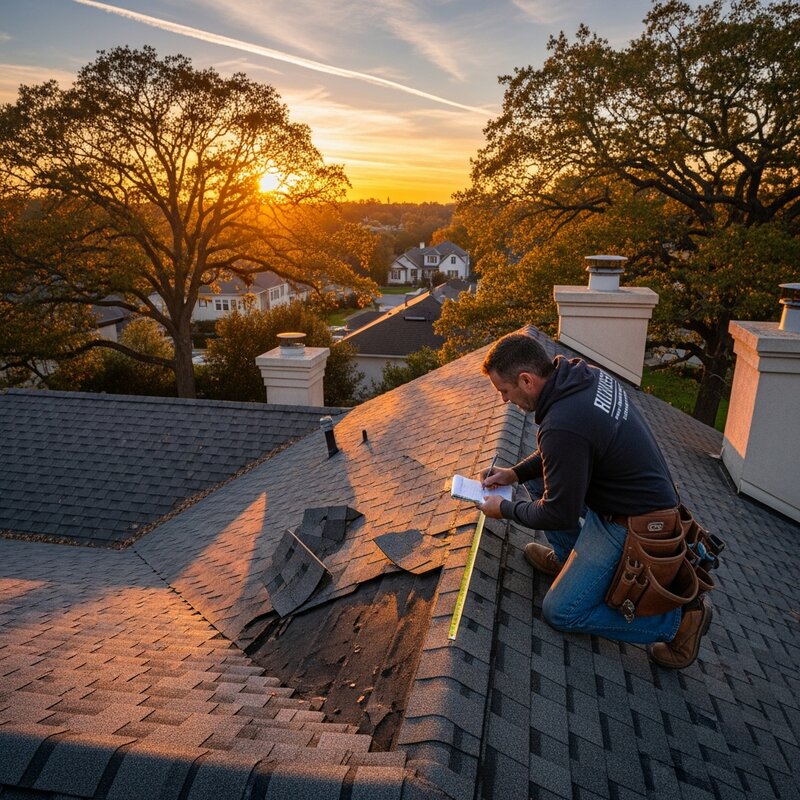
Storm damage from hail, wind, or fallen trees often qualifies for insurance coverage reducing out-of-pocket costs significantly. Document damage with photos before repairs begin and contact your insurance company promptly. Most policies require reporting claims within one year of damage occurrence. An adjuster will inspect damage and determine covered costs minus your deductible.
Be cautious of contractors offering to waive deductibles or guarantee claim approval—these practices violate insurance agreements and may constitute fraud. Legitimate contractors can assist with the claims process by providing detailed damage assessments and working with adjusters, but they cannot guarantee outcomes or manipulate the process.
Contractor vetting guidelines:
Get at least three detailed estimates comparing similar quality materials and warranty terms rather than choosing the lowest bid without considering value. Ask about manufacturer certifications—certified contractors often provide enhanced warranties and demonstrate commitment to quality installation practices. Avoid requiring full payment upfront; typical payment schedules request deposits of 10-30% with remainder due upon satisfactory completion.